
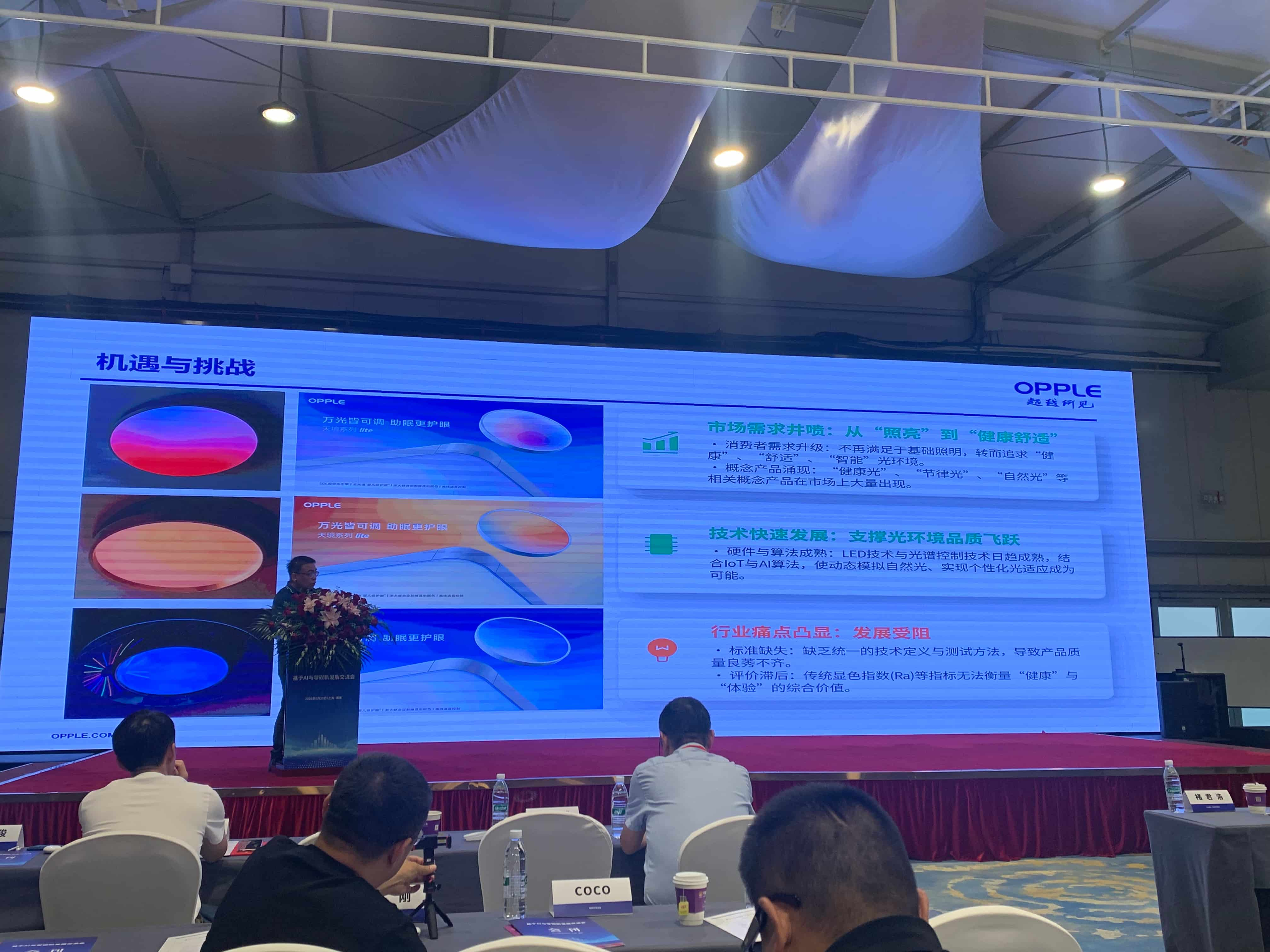
At this year’s SILA conference, one perspective really stuck with me: the LED lighting value chain can be broken down into three layers — users, brands, and manufacturers.
Each layer is evolving, but at different speeds. The faster layer pulls the slower one forward; those who can’t keep up get left behind.
Today, let’s use this three-layer framework to explore how the lighting industry’s value chain is being restructured.
User Layer: From “Illumination” to Personalization
Let’s start with the demand side — the user.
Ten years ago, what people wanted from a light bulb was simple: it should turn on, be bright enough, and last a long time. In plain terms, it was about basic lighting — just illuminate the space.
Today is different.
Look at the feature list of modern smart lights — it goes on and on:
- Safety monitoring: fall detection with automatic alerts for elderly users
- Sleep support: sleep-aid light modes plus sleep quality tracking
- Atmosphere & mood: colored light, aromatherapy, white noise — all included
And that’s just the consumer side. Dive into specific scenarios, and the demands become even more granular:
- Educational lighting must prevent myopia, protect eye health, and reduce fatigue
- Medical lighting should promote wound healing and support hair regrowth
- Road lighting needs to solve the “black-and-white tunnel” effect and penetrate rain and fog
- Senior-friendly lighting must balance safety and comfort without glare
Users no longer want “a light” — they want “a solution to my problem.” From basic lighting to ambient light, mood lighting, circadian rhythm lighting, and all the way to health and safety protection — demands are stacking up, layer by layer.
This trend can be summed up in one sentence: from meeting basic illumination to delivering personalized experiences.
And every time user demands climb another level, it presents a new challenge for the brands and manufacturers downstream.
Brand Layer: Software Is the Great Divider
User demands have changed. How do brands — what we call the “customer” layer — meet them?
The answer: hardware plus software. Neither is enough on its own.
Hardware is tangible — LED chips, drivers, enclosures. These are the foundation. But hardware alone isn’t enough. Ambient lighting, circadian lighting, and scene automation all depend on software. App control, voice control, automated scenes — these “intangible” elements are becoming the core of the product experience.
This has created a very real divide:
Major consumer brands have in-house development capabilities. Philips Hue, Govee, Nanoleaf — these brands build their own apps, cloud services, and ecosystem integrations. Software is one of their key competitive advantages. They have a direct connection to users, access to data, and the ability to iterate quickly.
Small and medium-sized brands don’t have this capacity. They want to make smart lights but can’t afford to maintain a software team, so they rely on third-party platforms like Tuya or Xiaomi Mijia. They use whatever features the platform provides — and what the platform doesn’t support, they can’t build.
Neither path is inherently right or wrong, but the gap is widening.
Brands with in-house development go deeper and deeper — more data leads to better algorithms, and a growing user base drives down marginal costs. Brands dependent on platforms become more and more alike — everyone uses the same solution, products become commoditized, and eventually it all ends in a price war.
Software capability is becoming the great divider between brands.
Manufacturer Layer: From “Making Lights” to “Delivering Light Solutions”
Moving down another layer, we reach manufacturers and upstream suppliers. The changes here are even more noteworthy.
In the past, the manufacturer’s role was clear: you give me specifications, I build to spec. LED chip makers competed on parameters, driver makers on efficiency, finished goods factories on cost. Everyone had their lane, and the value chain was linear.
Not anymore.
What customers want isn’t “an LED chip” — it’s a complete answer to “how do I use this chip in my product?” That’s why today’s LED chip companies aren’t just selling chips anymore. They’re bundling chips, optics, and dimming algorithms into complete solutions, empowering finished goods manufacturers.
OM’s approach is representative:
- Light source: point / line / area lighting, with wide CCT tuning and pastel colors beyond basic illumination
- Control: algorithms running locally on the controller, no cloud dependency
- Platform: custom interfaces and dimming curves on Xiaomi Mijia and Tuya
- Certification: Matter certification as the primary certificate, licensed to customers
In a nutshell: empowering customers with a complete “light + control + platform + certification” solution.
This isn’t just OM’s strategy — it’s an industry-wide trend. Everyone is moving from “selling components” to “selling solutions.”
Why? Because hardware manufacturing has become table stakes — if you can do it, so can everyone else, and it all ends in a price war. What truly differentiates is software development and service capability: can you customize light for specific user groups? Build dimming curves for specific scenarios? Design app interfaces around customer needs?
Software services are the key competitive differentiator for manufacturers going forward.
Which Layer Are You In?
Looking across all three layers, an interesting pattern emerges: each layer is being pushed to upgrade by the layer above it.
- Users want personalization → pushes brands to build software
- Brands need software capability → pushes manufacturers to deliver solutions
The value chain is shifting from linear to networked — it’s no longer about what upstream makes and downstream sells. Instead, whatever the user demands, the entire chain moves toward that goal together.
For anyone in this industry, the most important question isn’t “which layer am I in right now?” — it’s “what is the core competitive advantage of my layer becoming?”
- If you’re on the brand/channel side: Do you have a direct connection to your users? Do you have your own software capabilities?
- If you’re in manufacturing/factories: Beyond hardware, what software services can you offer? Can you help customers solve the “last mile” problem?
- If you’re upstream (chips, drivers): Are you selling parameters, or solutions? Have you packaged your technology into something customers can use directly?
The restructuring of the value chain is also a reshuffling. Some will be left behind. Others will seize the moment and climb aboard.
Which one do you want to be?
Version: V1.0 | Written by LED Product Manager | August 25, 2026 | Dongguan
Leave a Reply