• The Future of Smart Lighting: Insights from SILA Meeting

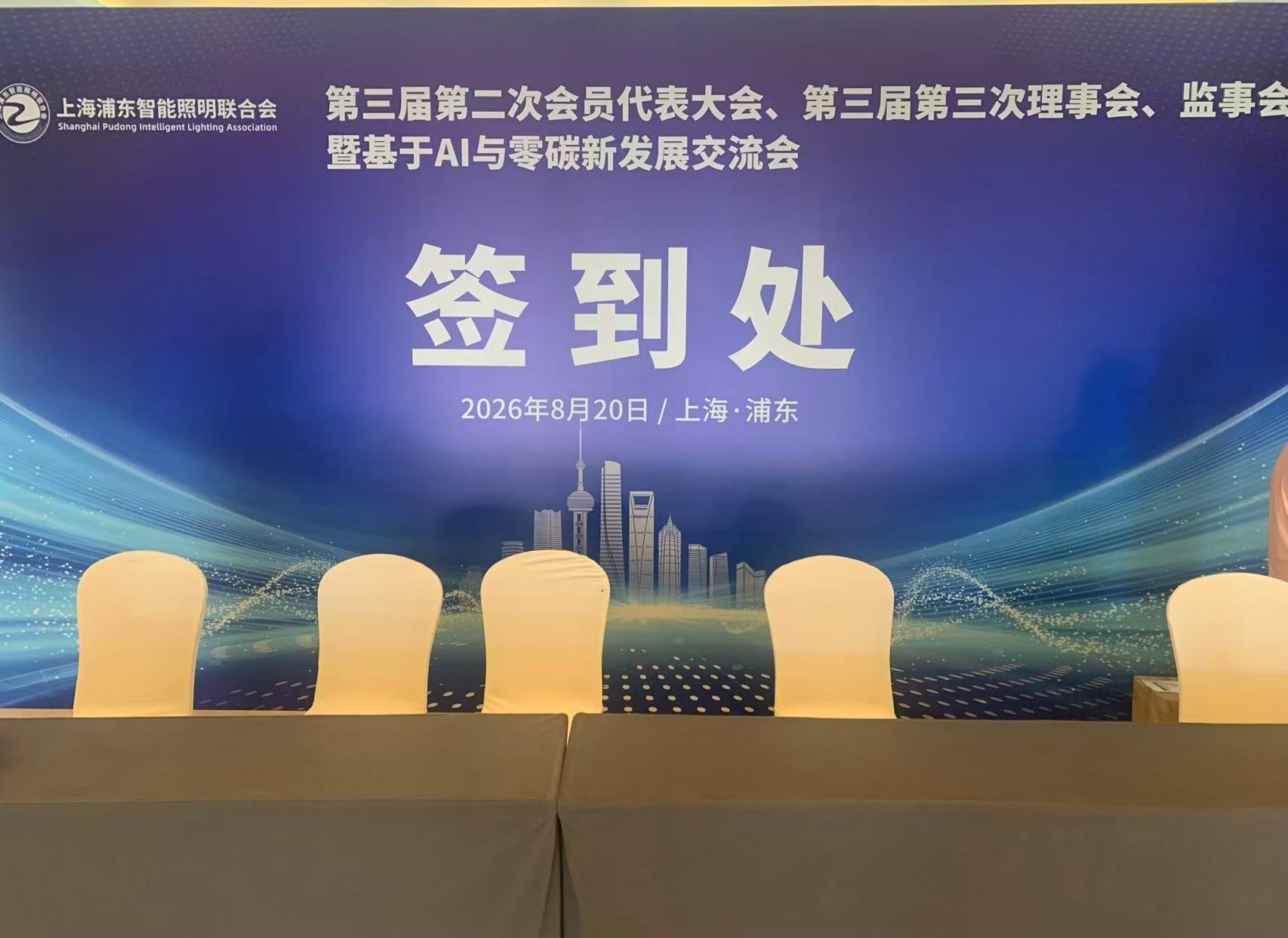
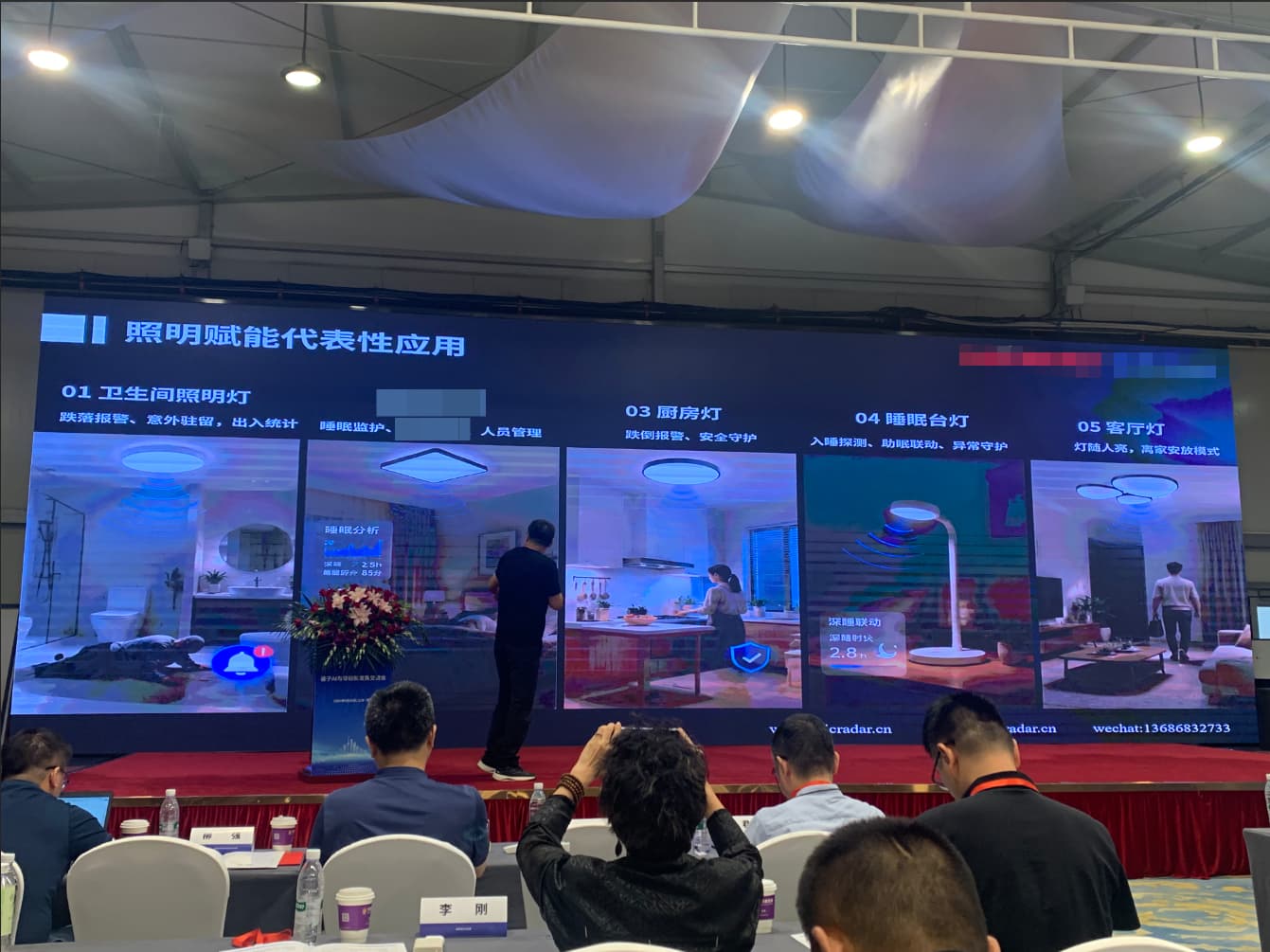
    Last week, I attended the member meeting and forum organized by SILA (Shanghai Pudong United Lighting Association). Drawing on my own experience, here are four observations:

    First, the era of software-defined hardware has arrived. In consumer lighting—whether for B2B customers or end users—software, not hardware, will determine the winners. Brands like Govee and Signify Hue have already validated this path: hardware is the foundation, but software is the source of differentiation and pricing power.

    Second, the value of LED is expanding from “illumination” to “light as a service.” LED products no longer merely provide basic lighting; through color temperature, spectral tuning, and software algorithms, they deliver mood setting, emotional regulation, light therapy, sleep assistance, and more. Think wake-up mode, nap mode, sleep mode—light can take a thousand forms.

    Third, AI brings opportunities to smart lighting, but the industry faces a data gap. Advances in AI are making truly intelligent lighting possible, yet the lighting industry—across consumer, design, and manufacturing sides—lacks high-quality, well-governed data. Leading brands like Govee and Hue have their own data but won’t open it up to small and medium-sized sellers. Those sellers lack both talent and data, and need platforms to provide enablement.

    Fourth, practitioners have two paths forward. For founders, product managers, R&D teams, manufacturers, and designers in the industry, to truly create value for users, you either build your own software platform and extend your feature set, or you partner with an enabling platform to jointly deliver value beyond illumination.

    Version:V1.0,Contents:By LED Product Manager,Time:Aug-24-2026,Space:Dongguang.

  • Govee’s Strategic Moves: Balancing Innovation and Marketing Risks

    This week revealed Govee’s dual rhythm: aggressive launches and promotions—Strip Light 2 launched, C9 Christmas lights entered countdown, Back to School Sale ended—while PR went silent for 42 days, a marketing image sparked backlash, and two new product pages returned 404. Activity and stillness coexisted.

    As an LED product manager, I asked: What’s the strategy? Which moves signal risk—and which open opportunity?

    Strip Light 2: Lowering the Mid-Tier Bar
    Launched August 10 at $49.99–$139.99 (four lengths), it brings flagship LuminBlend+—16-bit IC + RGBWWIC five-channel LEDs + Matter over Wi-Fi—to entry-level pricing. Per-foot cost drops from $5.09 to $2.13. This raises the technical floor for mid-range strips: basic RGBIC now looks outdated next to sub-$50 LuminBlend+.

    Meanwhile, COB Strip Light 2 is missing—its page returns 404. If delayed, it leaves a gap in Govee’s high-end COB line—a potential opening for competitors.

    54 Days of Promotional Testing
    Since June 10, Govee cycled through five promotion models—add-on gifts, blind boxes, BOGO, holiday bundles, and Back to School—without pause. This isn’t just discounting; it’s live A/B testing: Which model lifts conversion? Drives basket size? Builds urgency?

    The Back to School Sale stood out for its scenario focus: “Dorm Glow-Up” bundled strip lights, smart bulbs, and mini panels—not as products, but as a complete dorm upgrade solution. Lesson for cross-border brands: anchor discounts in real user moments. Context, not price, drives adoption.

    PR Crisis: One Image, Four Months, One Flawed Process
    A children’s room ad featured a book spine reading “white supremacy”—live since April 11, flagged only this week. The Verge and Ars Technica reported it; PR lead Connie Liu apologized.

    The issue wasn’t carelessness—it was process failure. The image came from a third-party library, and internal review missed it. This is a marketing supply chain breakdown: when assets, copy, or design rely on external vendors, weak review = high brand risk.

    In North America, text, symbols, and cultural references demand local team validation—not just translation. Skipping this invites disproportionate fallout.

    42-Day PR Pause: Strategic Silence, Not Stagnation
    No press releases from July 6 to August 17—the longest quiet stretch this year. Yet Govee shipped Strip Light 2, ran promotions, updated its app, launched an AI bot in Europe, and prepped for IFA 2026.

    The silence is tactical. All PR firepower is reserved for September 4—IFA week—when Govee plans weekly launches: Christmas tree lights, wall washers, sky ceiling lights, spherical net lights, 3D projectors, and monitor lights. This isn’t slowing down. It’s loading up.

    Bottom Line
    Govee operates like a hardware-native tech company—not a lighting brand. Its speed, testing rigor, and ecosystem thinking outpace traditional players. But rapid growth exposes cracks: marketing supply chain gaps, launch coordination issues, PR timing imbalances. These aren’t just Govee’s problems—they’re signals where competitors can act.

    C9 Christmas lights launch next week. I’ll track them. If you’re building smart ambient lighting for global markets, let’s talk.

    Version: V1.0 | Contents:LED Product Manager|Time: 2026/8/19 | Space: Shanghai

  • Shifting Trends in the Lighting Industry

    I’m a product manager with 15 years in the lighting industry.

    Since entering the field in 2011, I’ve worked across roles — foreign trade sales, factory manager, product manager — and across segments: from LED sign lighting and linear lighting to smart lighting (health + ambiance + mood). I’ve shifted from B2B products for B2B customers to consumer products sold through B2B channels, and from European to North American markets. Along the way, friends keep asking me: Is there still opportunity in this industry? Where do we go next?

    To be honest, I’ve wondered the same. After all these years making lights, is it really just about squeezing a few more percentage points of efficacy, or cutting a few more dollars from the BOM?

    Today, I sat through an entire day at the Shanghai Intelligent Lighting Association (SILA) 3rd General Assembly and the 2025 AI & Net-Zero New Development Forum. I listened to over a dozen industry experts and filled pages of notes. Walking out, what stuck with me wasn’t a specific technical parameter — it was a clear realization:

    The lighting industry’s second half is quietly changing lanes.

    I’m sharing these observations not as a conference recap, but as a reference point for fellow veterans who, like me, have been in this industry for years and occasionally feel lost. If this helps you, the article was worth writing.

    Shift #1: From “Functional Lighting” to “Experiential Lighting”

    After 15 years in product, my deepest feeling is this: my generation of lighting professionals was trained on parameters.

    Efficacy in lumens per watt, color rendering index (CRI), color temperature deviation in SDCM, rated lifetime in hours — pick up a fixture, and we instinctively reach for the spec sheet. Good specs meant a good product. That logic held for decades.

    But at this conference, the words I heard most weren’t traditional specs. They were: wellness, emotional value, healing, aging-in-place, children’s lighting, pet economy.

    What does that mean? The value of light is shifting from “illuminating a space” to “shaping a person’s state of being.”

    A few concrete directions:

    ·Wellness light: Blue-light-free, phosphor-free golden light — a technology that won China’s National Natural Science First Prize

    ·Sleep & healing: Sleep-aid lighting, light therapy, mmWave radar for sleep monitoring

    ·Emotional value: Pastel light paired with aromatherapy and white noise for mood regulation

    ·Niche scenarios: The elderly, children, pets — each demographic has unique lighting environment needs

    You won’t find these on a traditional spec sheet. They don’t answer “is it bright enough?” They answer “does it feel good?”

    For product managers, this is a fundamental shift. Before, you defined a lamp with an optical engineer’s mindset — tune the physical properties of light and you’re done. Going forward, you need a user experience mindset: you have to understand psychology, circadian rhythms, and the real needs of different user groups.

    A light is no longer just a luminous object — it’s a lighting environment solution. That phrase has been tossed around for years, but this time, it feels like it’s actually landing.

    Shift #2: From “Selling Hardware” to “Selling Services”

    One point from the forum really resonated: business innovation is moving toward “smart hardware + subscription services + operational value-add.”

    Why did this hit so hard? Because after 15 years in hardware, I know the pain of the one-and-done sale all too well. You sell a fixture, and the customer relationship ends there — unless something breaks and they need support. Reaching them again is next to impossible.

    Smart lighting changes this.

    Once a light is connected, it’s no longer a product frozen at the factory door. It can receive OTA updates, adjust light recipes based on user habits, integrate with other devices, and continuously deliver new scenes and features.

    What does that mean? Buying your light is the beginning of the relationship, not the end.

    Here’s an example: You used to sell a bedside lamp for 14.99,transactioncomplete.Goingforward,yousellasmartsleep−aidlamp—thehardwaremightstillbe14.99,transactioncomplete.Goingforward,yousellasmartsleep−aidlamp—thehardwaremightstillbe14.99, but you offer a subscription: monthly updated sleep light recipes, or personalized adjustments based on the user’s sleep data. The user pays a few dollars a month, and you have recurring revenue and ongoing engagement.

    This isn’t science fiction. In my overseas product research, I’ve already seen Govee doing exactly this. The fact that this conference focused so heavily on it tells me domestic players are waking up to it too.

    For product managers, this shift is a big challenge. You can’t just think about “what the product is when it ships.” You have to think about “what the product becomes after a year of use.” Hardware is the entry point. Services are the real moat.

    Shift #3: From “Product Competition” to “Ecosystem Competition”

    One term came up constantly at this conference: Matter.

    What is Matter? Put simply, it’s a universal connectivity protocol for smart homes. Previously, smart devices from different brands operated in silos — your lamp couldn’t talk to your speaker, and the user experience suffered. Matter solves this: everyone uses the same standard, and devices communicate seamlessly.

    Beyond Matter, there’s the Zhaga standard, DALI, lighting data quality standardization… these might sound technical, but the trend is clear: the lighting industry is moving from “going it alone” to “ecosystem collaboration.”

    For those of us in product, the impact is direct.

    Before, when selecting a solution, you mainly looked at performance and cost. Is the chip good? Is the driver efficient? Can we bring the BOM down? Those still matter, but now you have to ask more questions:

    ·Does this solution support Matter?

    ·Can it integrate with major smart home ecosystems?

    ·Does the data format comply with industry standards?

    ·How well does it interoperate with other devices?

    Don’t dismiss this as “nice to have.” From my conversations with B2B customers, major overseas clients — especially in Europe — now treat protocol compatibility and ecosystem integration as a baseline requirement, not a bonus. Without it, you don’t even qualify to bid.

    China might be a step behind, but the direction is the same. Tomorrow’s lighting product isn’t an isolated fixture — it’s a node in the smart home ecosystem. Early movers capture the upside; latecomers pay tuition.

    Shift #4: From “Product Compliance” to “Full-Lifecycle Compliance”

    I want to flag this especially for colleagues in overseas markets.

    At this conference, terms like carbon footprint, carbon emissions, eco-friendly packaging, circular economy came up constantly. The EU’s carbon footprint requirements are tightening, packaging materials face strict rules, and the circular economy is a hard trend. China is also building its own carbon emission factor system.

    Some might say: That’s the environmental department’s problem, what does it have to do with product managers?

    Everything.

    Because these requirements ultimately land on product definition. What materials do you use? How do you design for disassembly and recycling? How do you reduce packaging? How do you calculate the product’s total carbon footprint? These aren’t questions for the production line — they need to be answered on day one of product definition.

    When I took my NPDP training in the US back in 2021, the circular economy was a major module. Back then, it felt distant. Now it’s at our doorstep.

    After 15 years in product, I’ve learned: many external constraints feel like “a hassle” when they first appear, but they end up reshuffling the industry. Those who prepare early gain a step when the rules change.

    Carbon footprint is exactly that. Those who start paying attention now will be ready when EU regulations fully kick in in a couple of years. While everyone else is scrambling, you’ll already be taking orders.

    Final Thoughts: For Lighting Professionals Still Wondering Where to Go

    With all these shifts, some might feel anxious: Can I keep up with so much change?

    Honestly, I’ve felt anxious too. Every time the industry changes lanes, veterans go through an adjustment period.

    But after 15 years, I’ve also realized something: the technology and the赛道 change, but a product manager’s fundamentals don’t.

    What are the fundamentals? Insight into user needs. Judgment of industry trends. The ability to turn an idea into a great product. These don’t become useless when technology changes — if anything, the faster technology moves, the more they matter.

    The biggest takeaway from this conference wasn’t learning a new technology. It was confirming a conviction I’ve been building: between 2026 and 2030, fully transitioning into an AI product manager for smart lighting is a path worth taking.

    To my friends in the industry: if you’re also confused, hesitant, or unsure what comes next — that’s okay, it’s normal. In a period of industry transformation, who isn’t a little lost?

    But don’t stop moving. Go see more, listen more, try more. And if you have questions, leave a comment — the pitfalls I’ve navigated and the experience I’ve built over 15 years, if they can help you, will have been worth it.

    The lighting industry’s second half is still a long road. Let’s walk it together.

  • Why Lighting Competition is Heating Up: A Product Manager’s Insight

    A product manager’s perspective on why the baseline of competition in the lighting industry is rising fast — and what it means for anyone building hardware products.


    Three Events, One Pattern

    $0.68 LED strips and$1.35 power supplies. When a product manager sees prices like these, the first instinct is to run a BOM calculation — materials, labor, packaging, channel costs. The numbers never add up. There’s only one conclusion: someone is cutting corners somewhere you can’t see.

    764 CCC certificates revoked. In August, China’s market regulator announced that out of 2,483 product batches inspected, 764 had their certification pulled — 28 lighting manufacturers were among them. This isn’t about “no certificate.” It’s about “having a certificate but shipping products that don’t match what was certified.” One sample for testing, another for mass production. They got caught.

    Full social security contributions. China’s Golden Tax Phase IV system is now connecting payroll, personal income tax, and social security data. Multiple regions are requiring 90%+ compliance by year-end, pushing labor costs up 20–30%. The old trick of “paying the minimum base” to undercut competitors no longer works.

    Three events, one direction: gray-cost advantages are being systematically eliminated by three closing gates.


    A Product Manager’s Cost Sheet: Visible vs. Invisible Costs

    A product’s cost is more than what’s on the BOM. I break it into two layers:

    Cost TypeCompliant Manufacturers“Flexible” ManufacturersThe Gap Comes From
    Material CostReal materials, matches certificationSample passes, mass production cuts cornersCCC double-standard
    Labor CostFull social securityMinimum base or noneSocial security gray area
    Traffic CostQuality and reputationLow-price algorithm gamingPlatform low-price rules

    In the old competitive environment: those with high visible costs couldn’t beat those with low invisible costs.

    Consumers only see the final price — they can’t see what’s underneath. You say “we use brand-name capacitors,” they say “the one next door is 30% cheaper and it also has a CCC certificate.” How do you explain? You can’t.

    This is the lemon market — information asymmetry driving out good products with bad ones.


    Three Gates Repairing the Lemon Market

    Gate One: CCC Effectiveness Audits — Killing the “Certification Double Standard”

    Regulators are shifting their focus from “do you have a certificate?” to “does your certificate actually mean anything?” Unannounced factory visits, market sampling, post-certification supervision — they can show up anytime.

    For product managers: mass production must match the certified sample. Not close enough. Not almost. Exactly. Getting caught doesn’t just mean losing a certificate — it means losing sales eligibility for your entire product line.

    Gate Two: Full Social Security Compliance — Killing “Labor Arbitrage”

    Compliance is leveling the labor cost playing field. Small factories used to save 20–30% by underpaying social security. That was regulatory arbitrage, not real competitiveness.

    Now that road is blocked. What comes next? Efficiency. Who has leaner R&D processes, smarter supply chains, sharper product definitions. This is where product managers should have been focused all along.

    Gate Three: Platform Regulation — Killing the “Low-Price Traffic Dividend”

    Regulatory action against platforms using algorithms to force down prices sends a clear signal: algorithm-driven price wars and pricing interference are in regulators’ crosshairs.

    The “lowest price wins” traffic logic won’t hold forever. When traffic allocation diversifies, quality, brand, and service will gain weight. For manufacturers who’ve been investing in quality, this is a structural tailwind.


    The Product Manager’s Opportunity: From Cost Competition to Value Competition

    The essence of these three gates is shifting the main battlefield from “invisible cost competition” back to “visible value competition.”

    Winning in the past meant being bolder at cutting corners, more skilled at finding loopholes, better at gaming low-price traffic.

    Winning in the future requires better products, stronger technology, louder brands, and superior service.

    This is where product managers belong.

    Three directions worth investing in:

    1. Turn compliance into a selling point. CCC certification used to be table stakes — nobody talked about it. But in an industry where “two standards” is the norm, “real CCC,” “mass production matches samples,” “100% inspection before shipping” is differentiation itself. Make your certification process, quality control procedures, and key components transparent. Trust is a competitive advantage.

    2. Build value upward, don’t race prices downward. The value space in lighting is far from exhausted — light health, smart connectivity, long lifespan, design sensibility. Each one can support a premium far above “the lowest price.” The question is whether you’re willing to put in the work.

    3. Replace cost-cutting with product definition. Product managers used to act as professional negotiators, squeezing suppliers. The future demands value designers. Cost compression has a floor. Value creation has no ceiling.


    Three Action Items

    1. Audit your product certification status. Not just “do we have certificates?” — the real question is “does mass production match the samples?” Have key components been quietly swapped? Fix risks now, don’t wait for an audit.
    2. Re-examine your pricing logic. If your product still lives on “being $0.70 cheaper than the competitor,” watch out. As compliance costs rise, the low-price space keeps shrinking. Find your differentiation now — light efficiency? Smart features? Design? Find it. Amplify it.
    3. Treat compliance as a competitive advantage. CCC, energy efficiency, photobiological safety, RoHS — what used to be legal paperwork is tomorrow’s ticket to entry, and potentially a moat. Whoever gets through compliance faster and more reliably gains the upper hand in a tightening regulatory cycle.

    Closing Thoughts

    This isn’t an industry winter. It’s not the end of the road.

    It’s simply this: those who got ahead by cutting corners are being pulled back onto the right track.

    For real product managers, that’s good news.

    Finally, we can let the product speak for itself.


    Originally published on “LED Product Manager” — insights from a decade in lighting hardware, now exploring smart lighting and AIoT.

  • Three Smart Color Lighting Companies: Hue vs Govee vs Bangwei

    When analyzing the smart color lighting space, you can’t just look at Bangwei and Govee — Philips Hue is the true pioneer and benchmark of this category.

    Compare all three side by side, and a clear industry evolution map emerges: Hue defined the category, Govee redefined growth velocity with a consumer electronics playbook, and Bangwei is redefining the category’s boundaries with a lighting systems mindset.

    This article presents a hard comparison across six dimensions, concluding with my own assessment.


    1. Industry Positioning: Pioneer vs. Disruptor vs. Re-architect

    Philips Hue — The Category Pioneer

    Launched in 2012, Hue is the world’s first consumer-grade smart color lighting system, built by Signify (formerly Philips Lighting). Hue defined the fundamental form of the “smart color lighting” category: color bulbs + bridge + app + preset scenes. For over a decade, it has been synonymous with premium smart color lighting and the industry benchmark.

    Govee — The Consumer Electronics Disruptor

    Founded in 2017, Govee doesn’t play by the lighting industry’s rulebook. Using a consumer electronics + Amazon DTC strategy, it transformed color lights from “lighting products” into “digital lifestyle gadgets.” It has dominated Amazon’s lighting category for three consecutive years, proving the multi-billion-dollar market potential of color lighting through speed and scale.

    Bangwei — The Whole-Home Lighting Re-architect

    Founded in 2020, Bangwei is not satisfied with the positioning of “color lighting as a bonus feature.” It has introduced the concept of “full-color lighting,” aiming to upgrade color lighting from ambient accent to a foundational capability of whole-home primary lighting. The company is attempting to rebuild the category from the bottom up of the lighting system.

    In one sentence: Hue invented the smart color light bulb, Govee blew up its sales, and Bangwei wants it to become lighting itself.


    2. Product Strategy: Single-Product Ecosystem vs. Hit-Driven Portfolio vs. Whole-Home System

    Dimension Philips Hue Govee Bangwei
    Core positioning Smart color lighting system Smart ambient lighting category Whole-home full-color lighting
    Product form factor Full range: bulbs, strips, fixtures Primarily light strips, bar lights, desk lamps Full range: downlights, spotlights, strips, ceiling lights
    Role of color light Add-on feature to primary lighting Entire product value Foundational capability of primary lighting
    Typical user Smart home enthusiasts, tech geeks Young people, gamers, content creators New homeowners, high-end residences, commercial spaces
    Entry barrier High (bridge + bulbs required, starter sets) Low (single strip works out of the box) Highest (whole-home solution, engaged during renovation)

    Hue’s approach is “bulb-first, building a color ecosystem” — you can buy just one bulb or scale to an entire home, but color lighting remains a feature of the “smart bulb.”

    Govee’s approach is “strip-first, expanding the category” — it perfected the light strip first, then expanded horizontally to TV backlights, desk lamps, and outdoor lights, each as a standalone ambient product.

    Bangwei’s approach is “system-first, replacing the whole home” — it engages at the design stage, and all primary lighting fixtures are inherently full-color. Color is not an add-on — it’s the infrastructure.


    3. Technology Roadmap: Stability & Reliability vs. Feature Innovation vs. Light Quality

    The differences in technology focus across all three directly reflect their respective DNA.

    Dimension Philips Hue Govee Bangwei
    Technology focus System stability, ecosystem compatibility Content recognition, interactive features Color mixing precision, color consistency, spatial light environment
    Core technology Zigbee bridge ecosystem, gradient light technology RGBIC independent segment control, CogniGlow™ AI gaming light effects BWEE Chroma® color mixing algorithm, Light-Sound Harmony technology
    Color quality Ra ≥ 80, soft and uniform color, slightly weaker saturated colors Ra ≈ 75–80, slightly weaker high-saturation color reproduction Emphasizes wide color gamut and fine control (Ra data not disclosed)
    Protocols Zigbee (bridge) + Bluetooth Wi-Fi + BLE Zigbee 3.0 + BLE 5.3 + Matter
    AI direction Scene automation, HomeKit/Siri integration Game screen recognition, music sync Natural language interaction, spatial scene generation
    Patent count Not disclosed (parent Signify holds extensive lighting patents) 870 40+

    Hue’s technological moat is ecosystem and stability — while the bridge approach raises the entry barrier, it delivers advantages like offline availability, fast response, and support for many devices. The Bridge Pro, released in 2025, supports 150 devices and 500 custom scenes, and introduces an innovative “motion sensing” feature that detects human movement through Zigbee signal variations.

    Govee’s technological moat is features and iteration speed — RGBIC, AI gaming light effects, and HDMI sync are all highly perceivable features, updated frequently, always offering something new.

    Bangwei’s technological moat is optics and color mixing — coming from a lighting background, the team cares most about the quality of light itself: whether colors are accurate, whether transitions feel natural, and whether the light across an entire space has a coherent quality.


    4. Market Performance: Premium Incumbent vs. Mid-Tier High-Growth vs. Chinese New Entrant

    Dimension Philips Hue Govee Bangwei
    Primary market Global (focused on Europe and North America) 80+ countries globally (focused on Europe and North America) China (early overseas expansion)
    Core channels Offline retail + e-commerce + smart home channels Amazon DTC + independent site B2B ecosystem partnerships + offline experience stores
    Price band Premium ($50–$150 per light) Mid-tier ($20–$80 for strips) Mid-to-premium (whole-home solutions, starting at ~$1,400+)
    Revenue scale Not separately disclosed (parent Signify’s smart lighting business is in the multi-billion euro range) Exceeded RMB 4 billion in 2024 Not disclosed (estimated in hundreds of millions RMB)
    User scale Tens of millions globally (industry consensus) 30M+ app downloads, 3.77M MAU Not disclosed
    Growth stage Mature, steady growth High-growth, preparing for IPO Rapid growth, brand 2.0 upgrade

    A fascinating dynamic is at play: Hue holds the high end, Govee drives volume in the mid-tier, and a sea of white-label players fight a price war at the bottom. The entire smart color lighting market presents a clear pyramid structure.

    In 2025, the global smart ambient lighting market reached RMB 42.6 billion, with North America accounting for 51.2% and Europe 28%. China is only RMB 2.77 billion but growing at a CAGR of 106.9% — making it the fastest-growing incremental market, which explains Bangwei’s strategy of starting domestically.


    5. Business Models: Ecosystem Lock-In vs. Repeat Purchase Hits vs. System Solutions

    All three make money in completely different ways.

    Hue: Bridge + Ecosystem Lock-In

    Entry requires purchasing a bridge ($59.99 standard, $98.99 Pro). Once inside the Hue ecosystem, users are highly likely to keep buying Hue-branded lights and accessories — because cross-brand color lighting synchronization has long been an industry pain point. This is the classic “razor and blades” model: the bridge is the razor, the lights are the blades.

    Govee: Hit Products + App Stickiness

    No bridge required — a single strip works out of the box, making the entry barrier extremely low. Repeat purchases are driven by the app ecosystem and community operations (58% repurchase rate) — users buy a strip, then a TV backlight, then a desk lamp, with the app as the hub connecting all products. This is a classic consumer electronics model: attract traffic with hit products, monetize through category expansion.

    Bangwei: Whole-Home Solutions + B2B Revenue Sharing

    Bangwei follows the lighting industry’s traditional project-based + channel-based model — whole-home solutions have high average order values but long decision cycles and high customer acquisition costs. B2B ecosystem partnerships (with Haier, Midea, NVC, CDN, etc.) are a key acquisition channel, amplifying sales by embedding into others’ systems. This is a classic B2B + B2B2C model.


    6. Endgame Assessment: Where Is the Ceiling for Each Route?

    Let me conclude with my assessment.

    Philips Hue: Highest Brand Moat, But Limited Growth Upside

    Hue’s strengths are brand, ecosystem, and stability — it’s the “iPhone” of smart color lighting, and users are willing to pay a premium. But its problems are equally clear: high prices, high entry barriers, slow iteration speed. It is being chipped away from the mid-to-low end by players like Govee. Hue can defend the premium segment, but rapid growth will be hard to recapture.

    Govee: Fastest Growth, But a Visible Category Ceiling

    Govee used a consumer electronics playbook to build a RMB 4 billion color lighting business, proving the market potential of the category. But ambient lighting is fundamentally a “nice-to-have” product, not a necessity — users buy it for “cool” and “fun,” not because “I need a light.” Govee’s challenge is: where is the category ceiling? Can it upgrade from an “ambient lighting brand” to a “smart lighting brand”?

    Bangwei: Biggest Vision, But Highest Uncertainty

    If full-color lighting truly becomes the next-generation lighting standard, Bangwei could unlock the entire lighting industry’s replacement cycle — a trillion-RMB market. But this path is the hardest: high consumer education costs, traditional lighting giants that could pivot at any time, and slow replication speed for whole-home solutions. Bangwei is betting on a long-term trend, but in the short term it needs to prove its commercialization capabilities.


    A Final Question

    Three companies, three routes — each representing the past, present, and future of smart color lighting:

    • Hue represents the past — it defined the category but is being challenged by new players
    • Govee represents the present — it validated the market at the fastest speed but is still searching for its second curve
    • Bangwei represents the future — it’s betting on the biggest vision, but success is far from certain

    For those of us in the lighting industry, the real question is:

    Do you think color lighting will ultimately remain “ambient decoration,” or will it become “standard equipment for primary lighting”? And how far away is that inflection point?

    Feel free to share your thoughts in the comments.

    Version 1.0 · Contents by LED Product Manager  · August 16 2026·Shenzhen

  • Why I Started This Blog

    Why I Started This Blog

    I launched this blog, “LED Product Manager,” in early 2026. My goal was simple: to document my thoughts and insights as a product manager working on lighting products, my role, the companies I’ve been part of, and the industry at large. Writing helps me process what I’m learning and pushes me to grow faster — and if it’s useful to readers along the way, even better.

    Why It Took Me So Long to Publish

    Half a year has passed since I registered the domain. I tried writing technical articles. I tried letting AI draft posts for me. I tried keeping a casual, diary-style blog. Most of it was researched and assembled by AI, and deep down, none of it felt real. It didn’t feel like me — just content produced for the sake of producing content. I published a few pieces, then took them all down.

    Recently, for work, I’ve been diving deep into the software side of smart lighting products. To learn faster and truly absorb the material, I realized the best approach is to output as I learn: write articles, make videos, discuss ideas with colleagues. That’s how real growth happens — and that’s the kind of content worth sharing.

    Version: V1.0,Content:written by LED Product Manager,Time: August,16,2026 ,Space:Shenzhen